Baby Burger Font Review
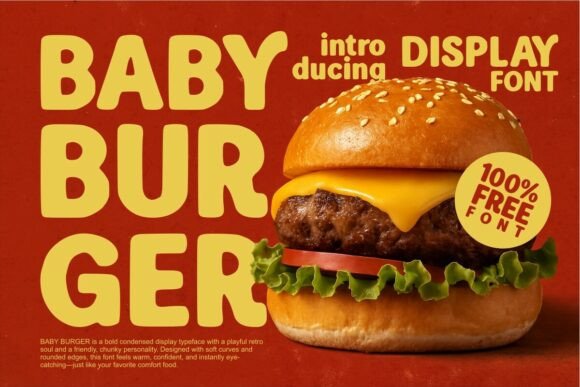
Opening a fresh brand board, I often find myself searching for a font that can instantly communicate the right tone without overcomplicating things. Baby Burger was one of those fonts that immediately caught my eye. As a bold condensed display typeface with a playful retro soul, it’s the kind of font that feels like a warm hug—friendly, confident, and ready to make an impression. For designers looking for a versatile and expressive typeface, Baby Burger is a standout in the world of freebies and fonts.
Baby Burger for Logo Design and Brand Identity
Testing Baby Burger on a logo concept for a new boutique coffee shop, I was struck by how well it balanced playfulness with professionalism. The soft curves and rounded edges give it a welcoming feel, while the bold weight ensures it doesn’t get lost in a crowded visual landscape. It’s perfect for brands that want to feel approachable but still maintain a sense of authority. Whether it’s a café, a handmade shop, or a creative studio, Baby Burger adds a touch of personality that resonates with modern audiences.
The font’s condensed structure makes it ideal for short phrases, such as a shop name or tagline. It doesn’t require much space, which is great for logos where every pixel counts. But don’t let its compactness fool you—it holds its own when scaled up for larger branding elements like signage or packaging.
Baby Burger for Packaging Design and Product Labels
When I placed Baby Burger on a packaging mockup for a skincare product line, it felt like the perfect match. The friendly, chunky look of the font gave the brand a warm and trustworthy vibe, which is essential for consumer goods. It worked especially well on labels where the text needed to be both legible and visually engaging. The soft curves helped soften the overall look, making the product feel more inviting than if I had used a sharper, more rigid typeface.
One thing to note is that Baby Burger shines best in short, impactful text. It’s not the best choice for long product descriptions or detailed instructions, where clarity and readability are paramount. But for headers, brand names, or key selling points, it’s a solid choice that adds character without overwhelming the design.
Baby Burger for Web Design and Social Media Graphics
In web design, Baby Burger made a strong impression on a homepage hero section. Its bold weight and condensed style made it stand out against a minimalist background, drawing attention without being too aggressive. It worked particularly well as a headline font, adding energy and a retro flair to the site’s aesthetic.
On social media layouts, Baby Burger brought a fun and recognizable element to posts. Whether it was used in a promotional banner or a branded Instagram story, the font added a sense of personality that aligned with the brand’s voice. It’s a great option for businesses looking to create a cohesive visual identity across digital platforms.
Baby Burger for Business Cards and Printed Materials
Trying Baby Burger on a business card layout, I found it to be both effective and stylish. The font’s chunky look made the contact information easy to read at a glance, while the soft curves added a human touch. It was especially useful for a local restaurant’s menu cards, where the font’s friendly nature complemented the overall dining experience.
For printed materials like flyers or posters, Baby Burger delivered a clean yet lively appearance. It didn’t require additional styling or effects to feel impactful, which is a big plus for designers who want to keep their work simple and efficient.
Baby Burger for Font Pairing and Typography Systems
When pairing Baby Burger with other fonts, I found that it works best alongside a classic serif or a clean sans serif. A serif font like Georgia or Playfair Display can provide contrast and balance, while a sans serif like Lato or Montserrat keeps the design modern and readable. This makes Baby Burger a flexible addition to any typography system.
It also pairs well with script or handwritten fonts for a more personalized touch, especially in branding projects that aim to feel authentic and artisanal. However, it’s important to use it sparingly, as its bold and distinctive style can easily dominate a design if not handled with care.
As a freebie, Baby Burger is a valuable resource for designers and small businesses looking to add a unique visual element to their work. It’s available in multiple file formats and supports a range of languages, making it accessible for international projects. Before using it in client work, though, it’s always wise to check the commercial licensing terms to ensure compliance with any specific project requirements.