Funmaker Font for Creative Branding
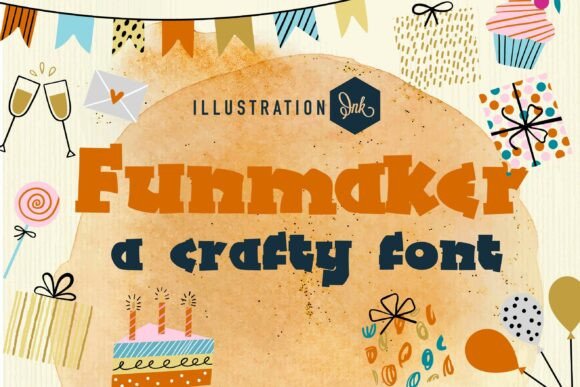
Working on a branding project for a new local café, I started with a blank canvas and a fresh set of ideas. The client wanted something that felt warm, inviting, and a little bit playful—something that would stand out without being too formal. That’s when I discovered Funmaker, a chunky display typeface that captures a handmade-and-heartfelt soul. Its massive, solid block letterforms with rhythmic, irregular edges immediately caught my eye, offering a unique visual energy that felt just right for the café’s vibe.
Funmaker for Logo Design and Brand Identity
As a graphic designer, one of the first things I do when testing a new font is to see how it works in a logo. Funmaker didn’t disappoint. The bold, uneven edges gave the logo a sense of movement and character, like it had been handcrafted rather than digitally designed. It was perfect for a brand that wanted to feel authentic and approachable. When paired with a simple sans serif for the tagline, the contrast created a balanced yet dynamic look that felt both modern and personal.
Using Funmaker in logo design meant I could focus on the emotional impact of the brand. The irregularities in the letterforms added a human touch, making the logo feel more like a signature than a generic symbol. It was clear this font wasn’t just about aesthetics—it was about storytelling through typography.
Testing Funmaker on Packaging Mockups
Once the logo was set, I moved to the packaging design. The café needed custom coffee bags, labels, and stickers, all of which required a strong, memorable typeface. Funmaker worked beautifully as a headline font, drawing attention without overwhelming the other elements. On a coffee bag, the font’s chunky weight made the brand name pop, while the subtle irregularities gave it a tactile, artisanal quality that resonated with the target audience.
I also tested it on product labels. The font’s boldness made it easy to read from a distance, but its organic shape kept it from feeling too rigid. It was a great example of how Funmaker can bridge the gap between readability and personality, especially in a retail setting where first impressions matter.
Funmaker for Social Media Graphics and Digital Assets
When working on social media graphics, I often look for fonts that can hold their own on screens of all sizes. Funmaker proved to be a strong contender. On Instagram posts and Facebook banners, the font’s thick strokes and uneven edges added visual interest without sacrificing clarity. It worked well as a headline for promotional content, helping to guide the viewer’s eye toward key messages.
I also used it in website headers, where it provided a bold, eye-catching presence. The font’s irregular edges gave it a sense of movement, making it ideal for a digital space that needed to feel lively and engaging. Pairing it with a clean, neutral background helped balance the design, ensuring the message remained clear and professional.
Funmaker for Editorial Design and Print Materials
For editorial design, such as flyers and posters, Funmaker brought a sense of energy and creativity. The font’s chunky forms made it ideal for short-form text, whether it was a callout or a featured event. Its irregular edges added a layer of texture that made the design feel more dynamic and less static.
In printed materials like business cards and brochures, the font’s boldness made it stand out. Even at smaller sizes, it retained enough detail to remain legible. This versatility made it a valuable addition to the brand’s design toolkit, especially when working with limited color palettes or minimalistic layouts.
Funmaker for Handmade and Artisanal Brands
One of the most rewarding aspects of using Funmaker has been seeing how it fits into the world of handmade and artisanal brands. Whether it’s a small skincare line, a boutique shop, or a creative studio, the font’s handmade feel aligns perfectly with the values of these businesses. It conveys authenticity, craftsmanship, and a personal touch that traditional fonts often lack.
For a client who sells handmade candles, I used Funmaker on the product packaging, where it added a sense of warmth and individuality. The font’s irregular edges gave the design a handcrafted look, reinforcing the idea that each product was made with care and intention. It was a subtle but powerful way to communicate the brand’s identity through typography.
Practical Tips for Using Funmaker in Design Projects
If you’re considering using Funmaker in your next project, here are a few practical tips. First, test it in different contexts—on a sign, a label, or a digital banner—to see how it performs. Pay attention to how the irregular edges interact with other design elements. Sometimes, they can add visual interest, but they can also become distracting if not balanced properly.
Pairing Funmaker with a complementary font is another important step. A clean serif or sans serif can help tone down its boldness, creating a more refined look. Alternatively, a script or handwritten font can add a playful contrast that enhances the overall design.
Also, check the font’s available styles, weights, and language support. Some display fonts have limited options, so it’s good to know what you’re working with before committing to a full brand system. And don’t forget to review the licensing terms, especially if you’re planning to use it commercially.