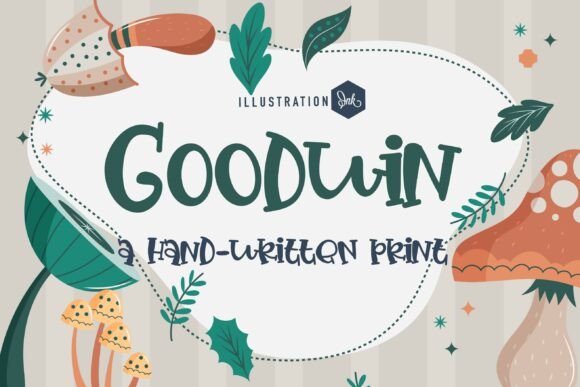
Goodwin Font for Web Design
Testing Goodwin in a hero section of a boutique online store, I was immediately drawn to its whimsical charm. The font’s organic curves and heavy, mixed-case character paths create a sense of movement that feels almost alive. It’s not just a display typeface—it’s an invitation to explore a world where design feels magical.
Goodwin for Creative Portfolio Websites
When working on a creative portfolio site, I chose Goodwin for the main headline. Its unique visual personality added a touch of elegance without overpowering the layout. The font’s heavy strokes made it stand out against a minimalist background, while the subtle variations in letterforms gave the design a handcrafted feel. It worked especially well for project titles, where a bold yet expressive font could draw attention without disrupting readability.
For subheadings and captions, I paired Goodwin with a clean sans serif font to balance the contrast. This pairing allowed the display typeface to shine without overwhelming the user. The result was a cohesive visual hierarchy that felt both professional and playful.
Goodwin for Boutique Online Store Banners
On a product landing page for a small business selling handmade goods, I used Goodwin for the banner text. The font’s organic style matched the brand’s aesthetic perfectly, reinforcing the idea of craftsmanship and individuality. It worked particularly well when placed over image backgrounds, where the font’s weight helped it remain legible even against complex textures.
I also tested Goodwin on mobile screens and found that it maintained clarity at smaller sizes. The font’s distinct character paths made it easy to scan, which is essential for users who might be browsing on a phone. For buttons and call-to-action elements, I used a bolder version of the font to ensure it stood out without being too distracting.
Goodwin for Coaching and Digital Branding Projects
When designing a coaching website, I wanted a font that felt approachable yet confident. Goodwin fit the bill. Its whimsical nature gave the site a friendly tone, while the strong, structured forms kept it from feeling too casual. I used it for section headers and feature titles, where its visual presence helped guide the user through the content.
The font’s versatility allowed it to work across different platforms. Whether it was a blog header, a social media graphic, or a promotional email, Goodwin retained its character without needing adjustments. It was especially effective when used as a logo font, where its unique shape added a memorable identity to the brand.
Goodwin for Blog Headers and Editorial Layouts
For a blog redesign, I experimented with Goodwin as the primary heading font. Its mix of heavy and light strokes created a dynamic visual rhythm that made the content more engaging. I found that using it sparingly—only for main headlines and key sections—helped maintain a clean and readable layout.
When paired with a simple serif font for body copy, Goodwin added a layer of sophistication without clashing. This combination worked well for long-form content, where readability was crucial. The font’s personality also helped differentiate the blog from other sites, making it more memorable for readers.
Goodwin for Landing Pages and Campaign Sites
On a campaign landing page for a new product launch, I used Goodwin for the main title and supporting text. The font’s decorative yet legible qualities made it ideal for short, impactful messages. It caught the eye without requiring the user to strain to read it, which is essential for high-conversion pages.
I also considered how Goodwin would perform on dark backgrounds and light backgrounds. In both cases, the font remained clear and visually appealing. For image overlays, I adjusted the opacity slightly to ensure the text didn’t get lost, but the font’s strong form still held up well.
Goodwin for Web Typography and Visual Hierarchy
One of the biggest challenges with display fonts like Goodwin is ensuring they don’t compromise readability. I found that using it for short phrases and headings was the most effective. When used for longer paragraphs, the font’s complexity could make it harder to read, especially on smaller screens.
To optimize for web usability, I limited the use of Goodwin to key areas of the design. This helped maintain a clear visual hierarchy while still allowing the font to add personality to the layout. For body text, I switched to a more traditional sans serif font, which improved overall legibility without sacrificing the brand’s unique identity.
Goodwin for Digital Ads and Social Media Graphics
When creating digital ads for a client’s online store, I used Goodwin for the headline text. Its bold, stylized look made the message stand out in a crowded space, helping the ad capture attention quickly. The font’s organic feel also aligned with the brand’s aesthetic, reinforcing the connection between the design and the product.
For social media graphics, I used Goodwin for captions and callouts. Its distinctive shape made the text more eye-catching, which is important for platforms where users scroll quickly. I also experimented with different color combinations to see how the font responded to various backgrounds, finding that it worked best with neutral or pastel tones.